



Aligning Cross-Agency Systems with Career Clusters
A job seeker, a high school student who is exploring career pathways, and an apprentice who is starting a program are all part of one big education and workforce system. However, our vocabulary and reporting across different educational and labor and workforce entities are often siloed, and different enough, that coordination can be challenging. A key component of this coordination is being able to share data across systems, and to better understand how we all contribute to educating and preparing people for careers.
The Challenge
- When a plumber works in a school, are they in the construction industry or the education industry?
- When an HR analyst works at a hospital, are they in the business sector or the healthcare sector?
When an apprenticeship program is registered, we all work together to identify the occupation by O*Net Code. But identifying a program by its occupations doesn’t give any insight on growth, quality or representation in a trade or sector. By grouping these and looking at the data through the same framework, we can put together a clearer picture of how we can better work across systems, ensuring education and workforce prepares people for careers.
The Solution
The Advance CTE Career Cluster framework offers a very clear and graceful solution to this question by grouping careers by their occupational function. It sets occupations in groups, based on the activities of the job. This allows educators and workforce development entities to train and prepares folks with the competencies and skills that are needed for a job. The framework drills occupations down into 14 career clusters, each with a few sub-clusters. For example, a plumber is in the construction career cluster, whether they work at a school or in office tower construction. An HR analyst is in the management and entrepreneurship career cluster, whether they work within the public sector or in a hospital.
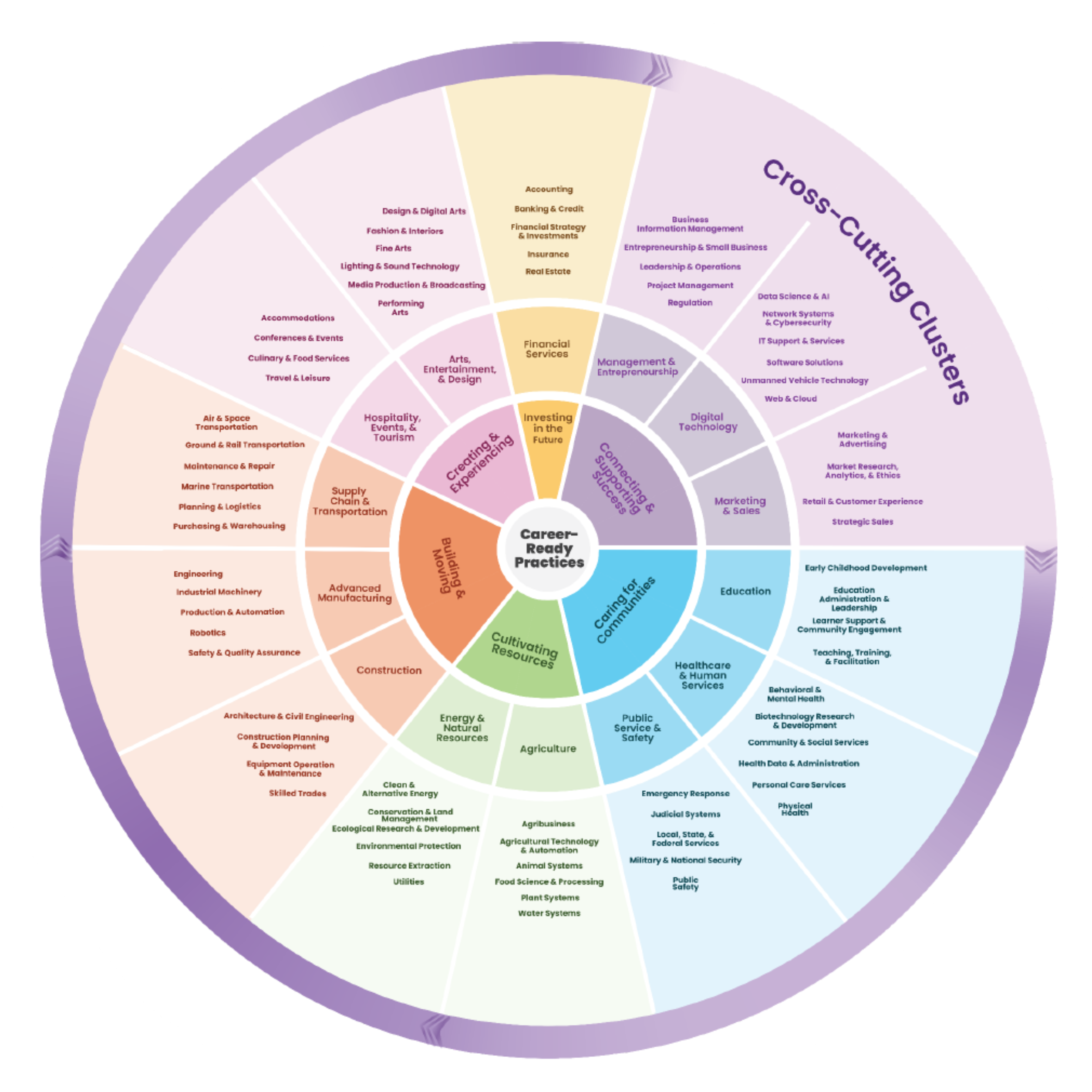
This organizing framework is now being used across the CA Department of Education and has been a guiding framework for developing Career and Technical Education (CTE) curriculum standards. It is being increasingly adopted by the California Community College system in their CTE and workforce development work. And, DAS is proud to be joining our workforce development partners and adopting career clusters into our data system.
During the third quarter meeting for the Interagency Advisory Committee on Apprenticeship (IACA), I presented insights on the growth of IACA apprenticeships by career clusters. During the subcommittee meetings on Healthcare, Advanced Manufacturing, Education, IT and Public Sector , further insights were shared on the corresponding career clusters. The next step in this work is to integrate the framework gracefully with the construction and public works data systems.
DAS is building important bridges across our educational and workforce system through key data integration, both in adopting this Career cluster framework and also through sharing data with the Cradle-to-Career (C2C) Data System, the statewide system linking education, workforce, and social service data from early learning through to employment. The C2C system links data and then de-identifies it to allow us all to better map educational pathways into careers, thus creating the potential for improved data driven policy and decision making.
Learn more about the California Cradle-to-Career Data System
Learn more about Career clusters
September 2026