



 Heat Illness Prevention
Emergency Response Procedures Elements of Your Written Program and Effective Work Practices
What is in T8CCR 3395?
T8CCR 3395(d)(4) states the following:
- (4) If an employee exhibits signs or reports symptoms of heat illness while taking a preventative cool-down rest or during a preventative cool-down rest period, the employer shall provide appropriate first aid or emergency response according to subsection (f) of this section.
T8CCR 3395(e)(3) states the following:
- (3) Designating one or more employees on each worksite as authorized to call for emergency medical services, and allowing other employees to call for emergency services when no designated employee is available.
T8CCR 3395(f) Emergency Response Procedures states the following:
- (f) Emergency Response Procedures. The Employer shall implement effective emergency response procedures including:
- (1) Ensuring that effective communication by voice, observation, or electronic means is maintained so that employees at the work site can contact a supervisor or emergency medical services when necessary. An electronic device, such as a cell phone or text messaging device, may be used for this purpose only if reception in the area is reliable. If an electronic device will not furnish reliable communication in the work area, the employer will ensure a means of summoning emergency medical services.
- (2) Responding to signs and symptoms of possible heat illness, including but not limited to first aid measures and how emergency medical services will be provided.
- (A) If a supervisor observes, or any employee reports, any signs or symptoms of heat illness in any employee, the supervisor shall take immediate action commensurate with the severity of the illness.
- (B) If the signs or symptoms are indicators of severe heat illness (such as, but not limited to, decreased level of consciousness, staggering, vomiting, disorientation, irrational behavior or convulsions), the employer must implement emergency response procedures.
- (C) An employee exhibiting signs or symptoms of heat illness shall be monitored and shall not be left alone or sent home without being offered onsite first aid and/or being provided with emergency medical services in accordance with the employer's procedures.
- (3) Contacting emergency medical services and, if necessary, transporting employees to a place where they can be reached by an emergency medical provider.
- (4) Ensuring that, in the event of an emergency, clear and precise directions to the work site can and will be provided as needed to emergency responders.
T8CCR 3395(h)(1) Training states the following:
- (1) Employee training. Effective training in the following topics shall be provided to each supervisory and non-supervisory employee before the employee begins work that should reasonably be anticipated to result in exposure to the risk of heat illness:
- (E) The different types of heat illness, the common signs and symptoms of heat illness, and appropriate first aid and/or emergency responses to the different types of heat illness, and in addition, that heat illness may progress quickly from mild symptoms and signs to serious and life threatening illness.
- (G) The employer's procedures for responding to signs or symptoms of possible heat illness, including how emergency medical services will be provided should they become necessary.
- (H) The employer's procedures for contacting emergency medical services, and if necessary, for transporting employees to a point where they can be reached by an emergency medical service provider.
- (I) The employer's procedures for ensuring that, in the event of an emergency, clear and precise directions to the work site can and will be provided as needed to emergency responders. These procedures shall include designating a person to be available to ensure that emergency procedures are invoked when appropriate.
T8CCR 3395(h)(2)(c) states the following:
- (2) Supervisor training. Prior to supervising employees performing work that should reasonably be anticipated to result in exposure to the risk of heat illness effective training on the following topics shall be provided to the supervisor:
- (C) The procedures the supervisor is to follow when an employee exhibits signs or reports symptoms consistent with possible heat illness, including emergency response procedures.
T8CCR 3395 (i)(3) states the following:
- (i) Heat Illness Prevention Plan. The employer's shall establish, implement, and maintain, an effective heat illness prevention plan. The plan shall be in writing in both English and the language understood by the majority of the employees and shall be made available at the worksite to employees and to representatives of the Division upon request. The Heat Illness Prevention Plan may be included as part of the employer's Illness and Injury Prevention Program required by section 3203, and shall, at a minimum, contain:
- (3) Emergency Response Procedures in accordance with subsection (f).
Guidance, Best Practices and Warnings
Cal/OSHA investigations (Study 2) showed that in 2006, 88% of workplaces where heat illness occurred did not have adequate Emergency Response procedures set up in advance.
Cal/OSHA investigations showed that in 2005, 64% of the workplaces where heat illness occurred did not have any Emergency Response Procedures set up in advance to respond to a heat illness emergency.
The following guidance helps in providing an effective emergency response in the event of employee heat Illness:
- Emergency medical services must be provided as quickly as possible if an employee suffers heat illness. Establishing emergency response procedures is particularly important at non-fixed or remote work sites or where access is difficult.
- If employees cannot reach emergency medical services directly (because cell phone coverage is inadequate, for example), the employer must designate a person who can immediately contact emergency services on behalf of the employees. The employees must be able to reach this person quickly (such as by radio) to request that emergency medical services be summoned.
- If, however, employees are able to contact emergency medical services directly, they must be allowed to do so in an emergency and not be required to contact a supervisor first.
- Employers must ensure that supervisors and employees are trained to recognize the signs and symptoms of heat illness, take steps immediately to prevent the progression of heat illness, provide basic first aid (such as cooling towels and shade), obtain emergency medical services, and not allow an employee with signs or symptoms of heat illness to be left alone or sent home without being offered onsite first aid or provided with emergency medical services.
- Employers, however, are not required to provide medical personnel on site, and supervisors and employees are not expected to have medical expertise to diagnose heat illness.
- The employer's procedures must include contacting emergency medical services when necessary. The procedures must include immediate steps to keep a stricken employee cool and comfortable once emergency service responders have been called. The goal is to stop the rapid progression to more serious illness, which can include mental confusion, loss of consciousness, and seizures.
- Employers must be prepared to safely transport employees to a place where they can be reached by an emergency medical provider where necessary.
- Mobile crews must be provided with a map of their location or detailed directions that can be given to emergency responders.
Best Practices
Emergency Response Procedures
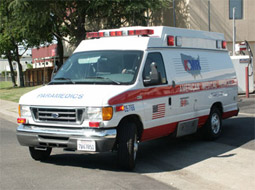
Your Emergency Response Procedures must provide for a rapid response from worksite certified first aid personnel (see T8 CCR Sections 1512, 3400, 3421, 3439, 6251) to initially evaluate potential heat illness victims and if necessary summon emergency medical responders in a timely fashion. These procedures, as required, must be in writing, and set up in advance of your employees working in warm or in hot conditions, and during high heat or a heat wave. The following measures will help ensure that your Emergency Response Procedures are effective at preventing or responding to Heat Illness:
- Reminding employees and supervisors to follow the written emergency response procedures before the start of work shift on a daily basis.
- Prior to assigning a crew to a particular worksite, a designated person provides workers and the foreman a map along with clear and precise directions (such as streets or road names, distinguishing features and distances to major roads) of the site, to avoid any delay of emergency medical services.
- Prior to the start of the shift, a designated person determines if a language barrier is present at the site and take steps (such as assigning the responsibility to call emergency medical services to the foreman or an English speaking worker) to ensure that emergency medical services can be immediately called in the event of an emergency.
- Foremen or supervisors carry cell phones, walkie-talkies, two way radios, satellite phones or other means of communication, to ensure that emergency medical services can be promptly summoned. Prior to each shift, the means of communication are checked to ensure they function at all worksites where employees are expected to be working.
- At remote locations such as rural farms, lots or undeveloped areas a designated person directs:
- An employee to physically go to the nearest road or highway where emergency responders can see them. or
- Employees to transport the Heat Illness victim to a point where they can be picked up by emergency medical services.
Note: If daylight is diminished, employees finding emergency response personnel or transporting victims will be given a reflective vest or a flashlight.
- Supervisors, employees, and designated persons always remain informed about their work site address or location, and updated whenever work locations change during the work shift.
- The location(s) of medical treatment facilities or alternate locations where emergency medical services have been pre-arranged are made know to supervisors and employees.
- Employees and supervisors closely watch each other at all times to know their whereabouts and to ensure that no one falls ill or becomes sick or missing without being noticed.
- Employees recognized as having any of the symptoms of heat illness are never left alone, allowed to leave the worksite or sent home without medical authorization
- If you are not available, make the designated person responsible for staying with and attending the employee recognized as having heat illness symptoms until first-aid or emergency medical services is provided.
- Handling of employees with possible signs or symptoms of heat illness:
- A certified first aid person checks the employee and determine whether resting in the shade, drinking cool water, removing excess layers of clothing and first aid procedures such as placing ice packs and fanning the victim prevent heat illness from developing (see Shade and Other Cooling Measures), or if emergency medical services need to be called.