



 Heat Illness Prevention
Preventative Cool Down Rest Periods Elements of Your Written Program and Effective Work Practices
What is in T8CCR 3395?
T8CCR 3395(d) states the following:
- (d) Access to shade.
- (3) Employees shall be allowed and encouraged to take a preventative cool-down rest in the shade for a period of no less than five minutes at a time when they feel the need to do so to protect themselves from overheating. Such access to shade shall be permitted at all times. An individual employee who takes a preventative cool-down rest:
- (A) shall be monitored and asked if he or she is experiencing symptoms of heat illness;
- (B) shall be encouraged to remain in the shade; and
- (C) shall not be ordered back to work until any signs or symptoms of heat illness have abated, but in no event less than 5 minutes in addition to the time needed to access the shade.
- (4) If an employee exhibits signs or reports symptoms of heat illness while taking a preventative cool-down rest or during a preventative cool-down rest period, the employer shall provide appropriate first aid or emergency response according to subsection (f) of this section.
Except for employers in the agriculture industry, cooling measures other than shade (e.g., use of misting machines) may be used in lieu of shade if the employer can demonstrate that these measures are at least as effective as shade in allowing employees to cool. See Provide Cooling Using Alternative Measures.
T8CCR 3395(e) states the following:
- (e) High-heat procedures.
- (5) Pre-shift meetings before the commencement of work to review the high heat procedures, encourage employees to drink plenty of water, and remind employees of their right to take a cool-down rest when necessary.
- (6) For employees employed in agriculture, the following shall also apply:
When temperatures reach 95 degrees or above, the employer shall ensure that the employee takes a minimum 10 minute net preventative cool-down rest period every two hours. The preventative cool-down rest period required by this paragraph may be provided concurrently with any other meal or rest period required by Industrial Welfare Commission Order No. 14 if the timing of the preventative cool-down rest period coincides with a required meal or rest period thus resulting in no additional preventative cool-down rest period required in an eight hour workday. If the workday will extend beyond eight hours, then an additional preventative cool-down rest period will be required at the conclusion of the eighth hour of work; and if the workday extends beyond ten hours, then another preventative cool-down rest period will be required at the conclusion of the tenth hour and so on. For purposes of this section, preventative cool-down rest period has the same meaning as "recovery period" in Labor Code Section 226.7(a).
T8CCR 3395(h) states the following:
- (h) Training.
- (1) Employee training. Effective training in the following topics shall be provided to each supervisory and non-supervisory employee before the employee begins work that should reasonably be anticipated to result in exposure to the risk of heat illness:
- (B) The employer's procedures for complying with the requirements of this standard, including, but not limited to, the employer's responsibility to provide water, shade, cool-down rests, and access to first aid as well as the employees' right to exercise their rights under this standard without retaliation.
Guidance, Best Practices and Warnings
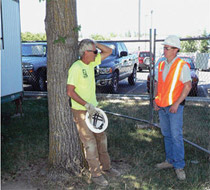 Cool-down rests help workers to recover from the heat and prevent overheating. A preventative cool-down rest period is not the same as regularly scheduled or other rest breaks (see Benefits of Rest Breaks). An employee may opt to take a "preventative cool-down rest" in the shade to help the body relieve excess heat. Rest breaks help cool the body to eliminate the need for a preventative cool-down rest period. There are numerous ways to enhance cooling the body during the preventative cool-down rest periods and rest breaks (see Sufficient Amounts of Drinking Water and Shade and Other Cooling Measures).
The importance of prevention cannot be overstated. Employees waiting until symptoms appear before seeking shade and recovery are at significant risk of developing heat illness. Also, the progression to more serious illness can be rapid, and can include altered coordination and speech, mental confusion, unusual behavior, nausea, vomiting, hot dry skin, unusually profuse sweating, loss of consciousness, and seizures. The affected employee may be unable to self-diagnose these problems.
Following information provides guidance to the employers on providing cool-down rest to their employees when needed:
- It is crucial that workers not be rushed while taking the cool-down rest.
- Water should be available in the rest area so that employees are encouraged to drink more water.
- The employee must be monitored during the cool-down rest and asked if he or she is experiencing any symptoms of heat illness including simple fatigue. If any signs or symptoms of heat illness are observed or reported, the employer must not order the employee back to work and must continuously observe the employee until the signs or symptoms have abated.
Note:
Common early signs and symptoms of heat illness may include, for example, pale skin, heavy sweating, headache, muscle cramps, and fatigue. If no sign or symptom of heat illness is observed or reported, monitoring may be periodic, not continuous. - If an employee exhibits or complains of any sign or symptom of heat illness, first-aid procedures should be initiated without delay.
- If heat illness is suspected, emergency medical personnel should be contacted immediately. No employee with signs or symptoms of heat illness should be left unattended or sent home without being offered onsite first aid or provided emergency medical services, as discussed in subsection (f).
Best Practices
Providing Cool Down Rest Periods
When providing cool down rest periods make sure to:
- Train your employees and supervisors so they understand the importance of Cool Down Rests in preventing heat illness
- Train your employees and supervisors on your Emergency Response Procedures
- Use locations for cool down rests which are:
- Available to all employees and supervisors at all times
- Spacious enough to accommodate workers in a relaxed body posture
- In the shade and are either open to the air or provided with ventilation or cooling
- Near sufficient supplies of drinking water
- Have supervisors and /or other designated person(s) closely monitor the employee during Cool Down Rests
- Ensure that employees recognized as having any of the symptoms of heat illness are never left alone or sent home without medical authorization
- Ensure employees frequently drink sufficient amounts of water